
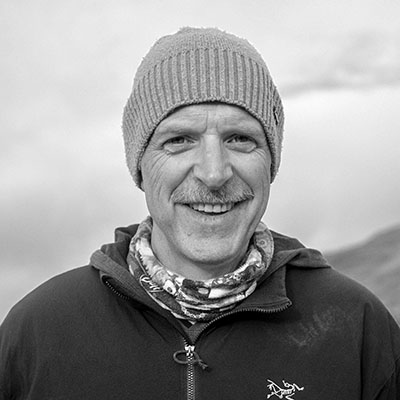


I grew up near the Rhineland lignite mining area in West Germany. The resettlement of villages and the loss of social ties in those communities was the subject of an early film.
After spending a year living in Bolivia in the 1990s, I started closely observing the struggle for natural resources in the context of colonialism and economic justice.
In the case of MATERIA PRIMA, raw material extraction has not yet begun. The narration circles around the expectations of those involved and the negotiations between them. What image do the players involved have of each other? What role does the historical experience of colonialism play in their thinking and decision making? How do the different sides interact with each other? What form of participation by local people is being encouraged, and by whom? Is there such a thing as sustainable mining?
Thanks to the long production period of nearly six years, we were able to establish a network in Bolivia and gain access to all parties involved: village communities, EU diplomats, EU entrepreneurs, and the Bolivian government. The result is a multi-perspective narrative.
Based on our experience with LA BUENA VIDA (2015) in northern Colombia, we were aware that first we had to establish a network of partners in Bolivia. Due to the tense and highly polarised political situation in Bolivia, this was a lengthy process.
Over the production period, the economic situation of the people deteriorated rapidly. Petrol and diesel became scarce, food became increasingly expensive, roadblocks paralysed entire regions, and there was an attempted military coup in La Paz. Planning the filming became complicated, as many people, including some team members and protagonists, were focused solely on coping with the present moment.
The filming locations were between 3,500 and 4,500 metres above sea level, which required extremely careful preparation to protect the team from altitude sickness. Some of our protagonists live in precarious conditions. Through careful preparation and intensive communication before, during and after filming, supported by our Bolivian team members, we tried to not reproduce Eurocentric perspectives, to avoid voyeuristic moments, and to respect the dignity of each individual.